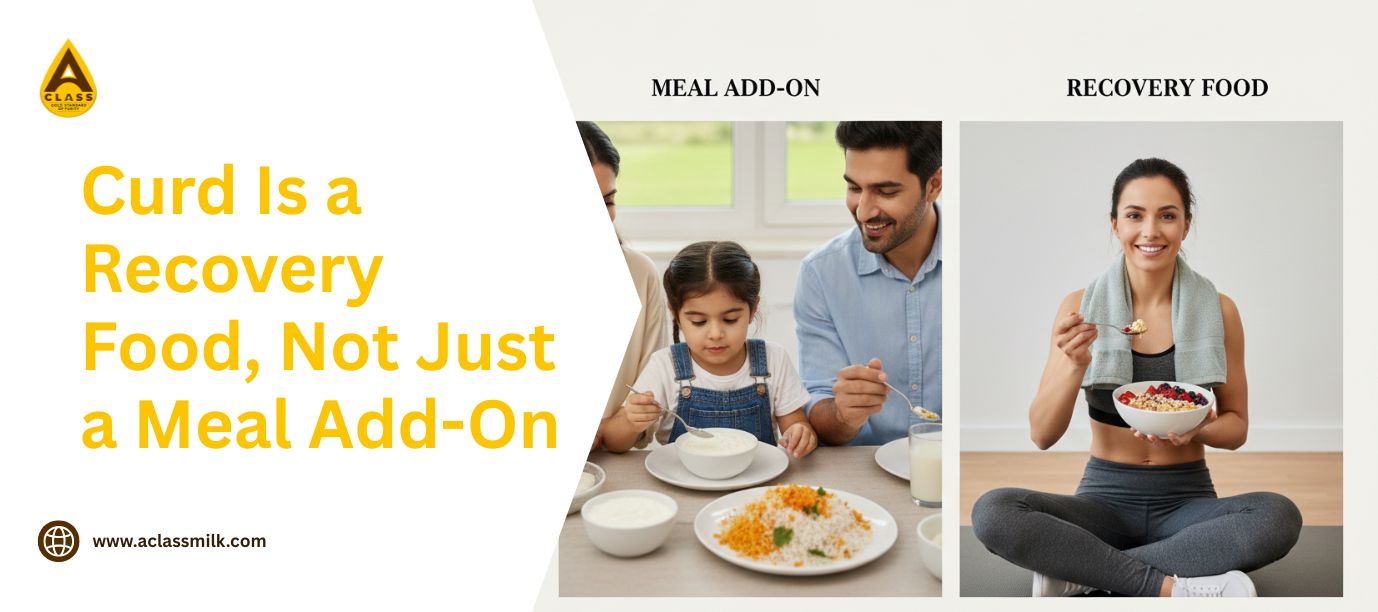
Curd is usually placed on the side of the plate, but its real value begins after the meal is over. In Indian diets where meals are often rich in spices, oil, and grains, the body needs help returning to balance. Curd plays that recovery role quietly, helping the system settle instead of struggle.
A-CLASS curd is prepared for this exact purpose. It is meant to restore comfort after eating, not compete for attention during the meal.
What Happens in the Body After a Heavy Meal
After a rich lunch or dinner, digestion slows and internal heat rises. This is when discomfort, acidity, or fatigue often sets in. Curd helps counter this process by cooling the system and supporting smoother digestion, especially when meals include paneer, mustard oil, or ghee.
When curd quality is poor or overly sour, this recovery process fails. Instead of calming the body, it adds another layer of irritation. Balanced curd supports the body’s natural reset after eating.
How Curd Supports Post-Meal Recovery
It stabilises digestion after oil-rich cooking
Meals cooked in mustard oil or finished with ghee generate internal heat. Mild, well-fermented curd helps neutralise this effect and prevents post-meal heaviness.
It helps the body process protein more comfortably
Paneer and milk-based dishes digest slower. Curd supports this process by improving tolerance and reducing the feeling of fullness that lingers too long.
It cools without shocking the system
Unlike cold drinks or desserts, curd cools gently. Proper fermentation allows it to soothe digestion without slowing it abruptly.
It reduces the need for corrective snacks
When meals settle well, people naturally avoid unnecessary post-meal snacking or sweets that are often consumed to counter discomfort.
Why Daily Curd Works Better Than Occasional Use
Curd is most effective when consumed consistently. Daily intake trains the digestive system to respond smoothly after meals. Sporadic consumption, especially of varying quality, often leads to unpredictable results.
A-CLASS curd is designed for regular use. Its mildness allows it to be eaten daily alongside lunch or dinner without causing taste fatigue or acidity over time.
The right curd helps your body finish the meal properly.
How Preparation Quality Determines Recovery
Curd’s recovery role depends heavily on fermentation control. Over-fermented curd becomes sharp and aggressive, while under-fermented curd lacks functional benefit. A-CLASS focuses on balanced fermentation so curd remains supportive rather than disruptive.
This control ensures curd pairs well with a wide range of meals, from simple rice dishes to richer paneer and ghee-based preparations.
What Dehradun Families Feel the Difference In
Customers often notice the change after lunch. “I don’t feel sleepy or acidic anymore,” says Mr. Tiwari from Ajabpur. That post-meal comfort is the true sign of curd doing its job.
Serving Curd for Maximum Recovery
Curd should be eaten plain or lightly seasoned, not overloaded with sugar or spices. Serving it fresh and undisturbed preserves its structure and effectiveness after meals.
Creating Recovery-Friendly Meals
Meals cooked with A-CLASS mustard oil, balanced with paneer or milk-based dishes, and followed by fresh curd settle more comfortably. Finishing lightly with A2 ghee enhances satisfaction without disrupting digestion.
Let your meals end well
Order fresh curd from A-CLASS. Call 70377 29889 for same-day delivery in Dehradun or visit A Class Milk.