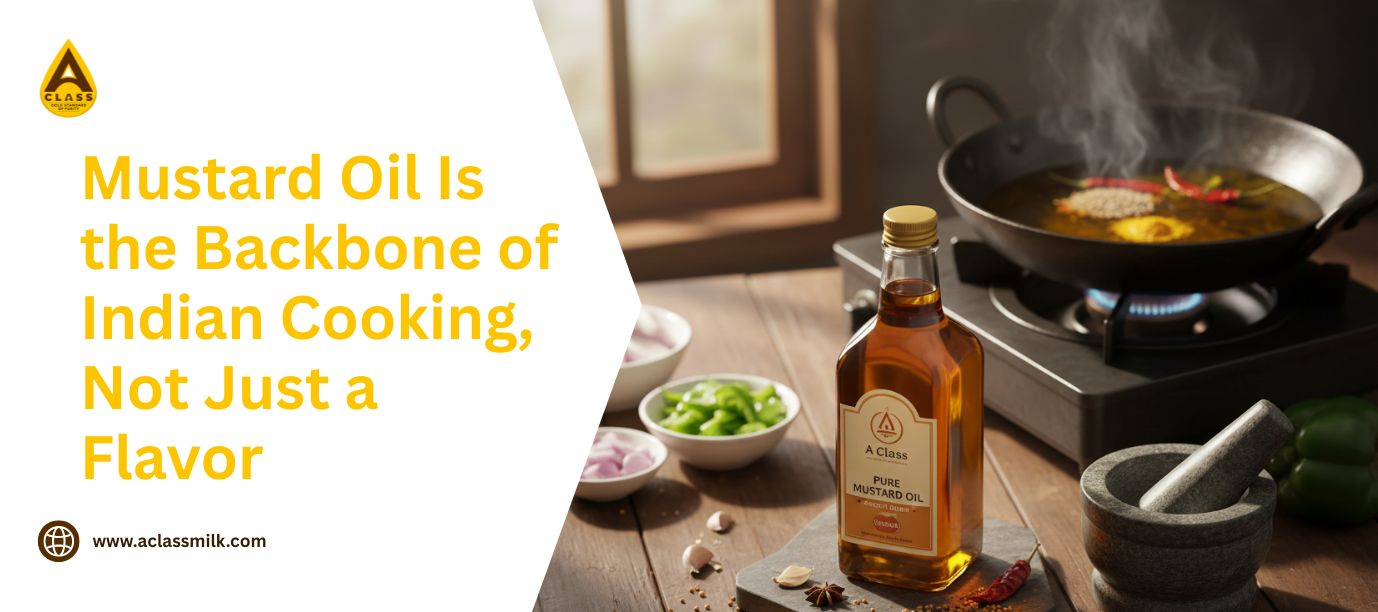
Mustard oil is often described only by its sharp aroma, but its real role in Indian kitchens is structural. It sets the base for spices, determines how vegetables cook, and influences how heavy or light a meal feels afterward. When mustard oil is wrong, even good ingredients struggle to shine.
At A-CLASS, mustard oil is treated as a foundation ingredient that works in harmony with milk, curd, paneer, and ghee, not as an isolated product. The goal is to support cooking chemistry, not overpower it.
Why Cooking Feels Different When the Oil Is Right
Oil decides how heat travels through a dish. Mustard oil, when properly prepared, heats quickly, carries spices efficiently, and coats ingredients evenly. This reduces overcooking and prevents vegetables or paneer from turning greasy or soggy.
When oil quality is poor, cooks instinctively add more spices or fat to compensate. With the right mustard oil, flavors develop naturally, allowing simpler cooking and better control over portions.
How Mustard Oil Shapes the Entire Meal
Spices bloom faster and more evenly
Proper mustard oil reaches the right cooking temperature quickly, allowing whole and ground spices to release aroma without burning. This creates depth early in cooking instead of forcing heavy seasoning later.
Paneer and vegetables absorb flavor, not oil
When oil quality is clean and stable, paneer sears instead of soaking fat. Vegetables retain structure and taste rather than turning limp or oily.
Curd-based gravies stay balanced
Mustard oil supports acidity instead of fighting it. When paired with curd, it helps gravies stay smooth and rounded instead of sharp or separated.
Less oil is needed for satisfaction
Strong aroma and clean heat transfer mean smaller quantities achieve better results. This naturally reduces excess fat in daily meals.
The Relationship Between Mustard Oil and Dairy
Dairy products respond strongly to oil choice. Paneer cooked in unstable oil turns chewy. Curd-based gravies split or feel acidic. Even ghee loses impact when layered over heavy oil usage.
A-CLASS mustard oil is prepared to complement dairy, not clash with it. It allows milk-based products to express their natural texture and flavor without interference.
When the base is right, everything built on it tastes better.
Why Traditional Kitchens Never Separated Oil and Dairy
Historically, Indian cooking treated oil, milk, curd, and ghee as parts of one system. Each had a role depending on temperature, timing, and dish type. Mustard oil built the base, dairy softened and balanced the meal, and ghee finished it.
A-CLASS follows this same logic. Products are designed to work together, not compete for attention on the plate.
What Dehradun Home Cooks Notice First
Customers often say they reduced oil usage without trying. “Food tastes fuller with less oil now,” says Mrs. Panwar from Raipur. This change happens naturally when the oil does its job correctly.
Using Mustard Oil Without Overpowering Food
Mustard oil should be heated properly before adding ingredients. Underheated oil tastes raw, while overheated oil loses aroma. Using the right temperature preserves flavor and keeps dishes light.
Completing the Plate with the Right Pairings
Cook vegetables and paneer in A-CLASS mustard oil, balance the meal with fresh curd, and finish with a small amount of A2 ghee where needed. This combination creates depth, comfort, and satisfaction without heaviness.
Build flavor from the base up
Order A-CLASS Mustard Oil today. Call 70377 29889 for delivery in Dehradun or visit A Class Milk.